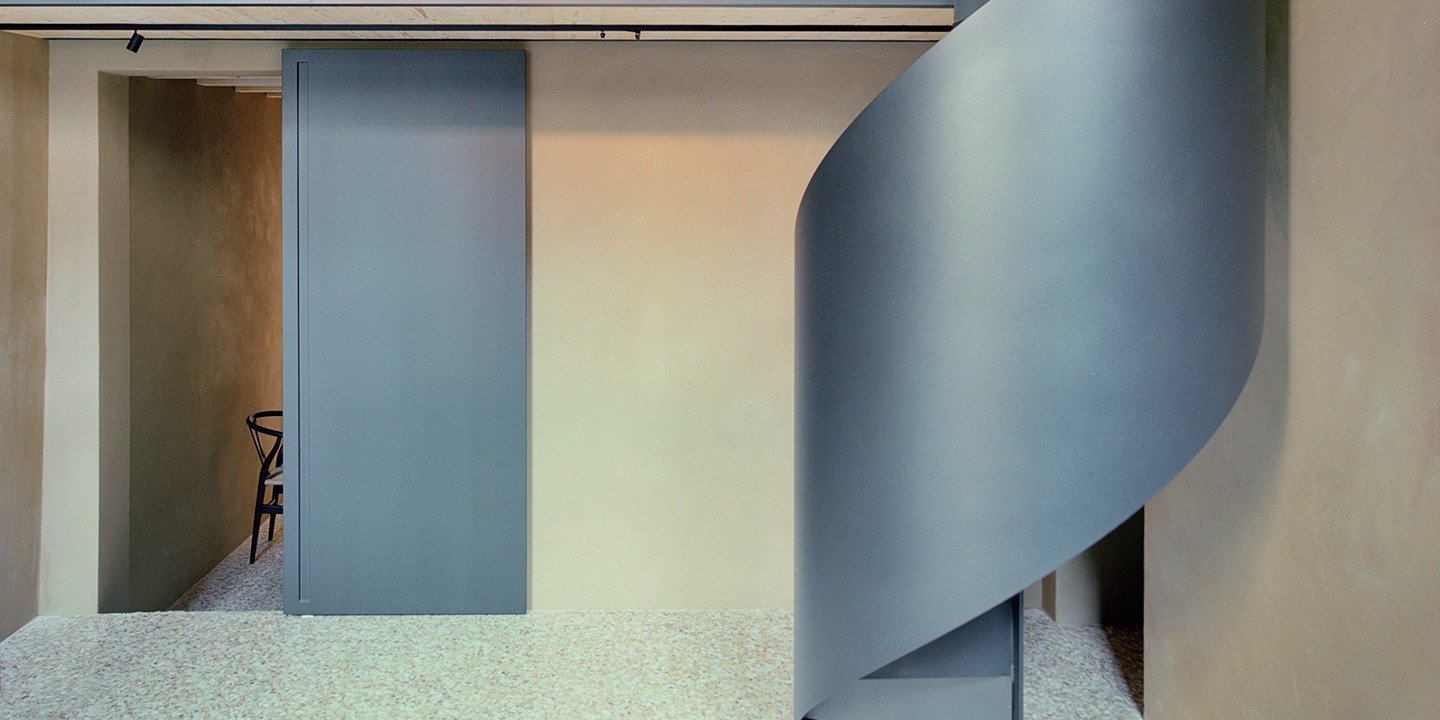
In the heart of Padua, the Architettura Tommasi studio presents a new renovation project within the historic building known as Casa degli Obizzi protected for its cultural architectural and artistic value. Completed in 2025, the intervention concerns Loft GB: approximately 85 square meters arranged over two levels and characterized by a 5-meter internal height which allowed for a transformation of the space’s aesthetic identity. The loft features dual exposure overlooking both the street and the inner courtyard.
A historic building
The loft is part of the Casa degli Obizzi building a structure dating back to the 14th century and the historic residence of the noble Obizzi family of French origin. Over the centuries the palace has undergone numerous transformations: shortly before 1682 a major construction intervention was carried out while in 1781 part of the complex was demolished.
From the 1940s onwards the palace was converted into a residential complex. In 2015 the entire building underwent an initial general restoration which involved distributional changes and a change of use.
The loft is part of the Casa degli Obizzi building a structure dating back to the 14th century and the historic residence of the noble Obizzi family of French origin. Over the centuries the palace has undergone numerous transformations: shortly before 1682 a major construction intervention was carried out while in 1781 part of the complex was demolished.
From the 1940s onwards the palace was converted into a residential complex. In 2015 the entire building underwent an initial general restoration which involved distributional changes and a change of use.
The project
The project initiated by Architettura Tommasi aimed to combine contemporary living requirements with respect for the building’s pre-existing architectural features. The restoration of the loft involved several transformations of the internal space arranged over two levels the ground floor and the mezzanine level.
Initially the dwelling featured a pre-existing staircase along one side leading to the mezzanine level which was removed in order to recover space for the insertion of a bathroom and a bedroom.
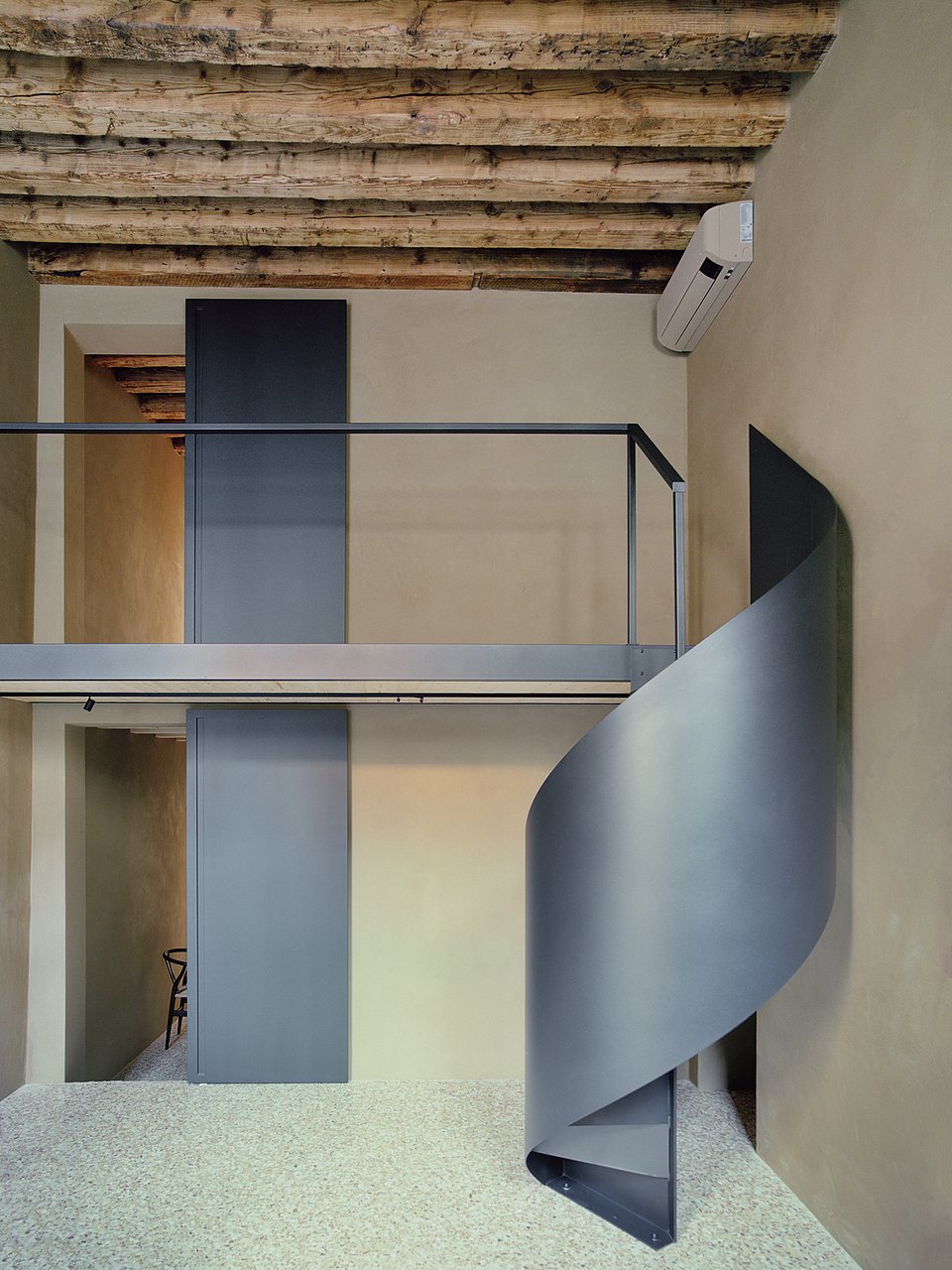
The new design is distinguished by a new helical staircase located within the living area conceived to optimize space and improve accessibility. A black steel staircase with a contemporary style redefines the spatial perception and becomes both the functional and visual focal point of the entire loft.
The ground floor accommodates the living area with the kitchen and living room connected to the bedroom through the demolition of an existing wall and the insertion of three steps required to compensate for the change in level creating a continuous environment that overlooks the building’s inner courtyard. The mezzanine level houses an additional room a bathroom and storage spaces.
The project initiated by Architettura Tommasi aimed to combine contemporary living requirements with respect for the building’s pre-existing architectural features. The restoration of the loft involved several transformations of the internal space arranged over two levels the ground floor and the mezzanine level.
Initially the dwelling featured a pre-existing staircase along one side leading to the mezzanine level which was removed in order to recover space for the insertion of a bathroom and a bedroom.
The new design is distinguished by a new helical staircase located within the living area conceived to optimize space and improve accessibility. A black steel staircase with a contemporary style redefines the spatial perception and becomes both the functional and visual focal point of the entire loft.
The ground floor accommodates the living area with the kitchen and living room connected to the bedroom through the demolition of an existing wall and the insertion of three steps required to compensate for the change in level creating a continuous environment that overlooks the building’s inner courtyard. The mezzanine level houses an additional room a bathroom and storage spaces.
Materials and furnishings
Great attention was given to the materials favoring natural and sustainable options. The original Venetian terrazzo flooring was preserved while the walls on both the ground floor and mezzanine level are finished with a natural clay-based plaster chosen for its breathable and sustainable qualities as well as for the tactile and visual texture it creates in contrast with the steel of the staircase. The bathrooms feature gres stone finishes contrasted with black sanitary fixtures of minimalist design contributing to a restrained yet strongly characterized aesthetic.
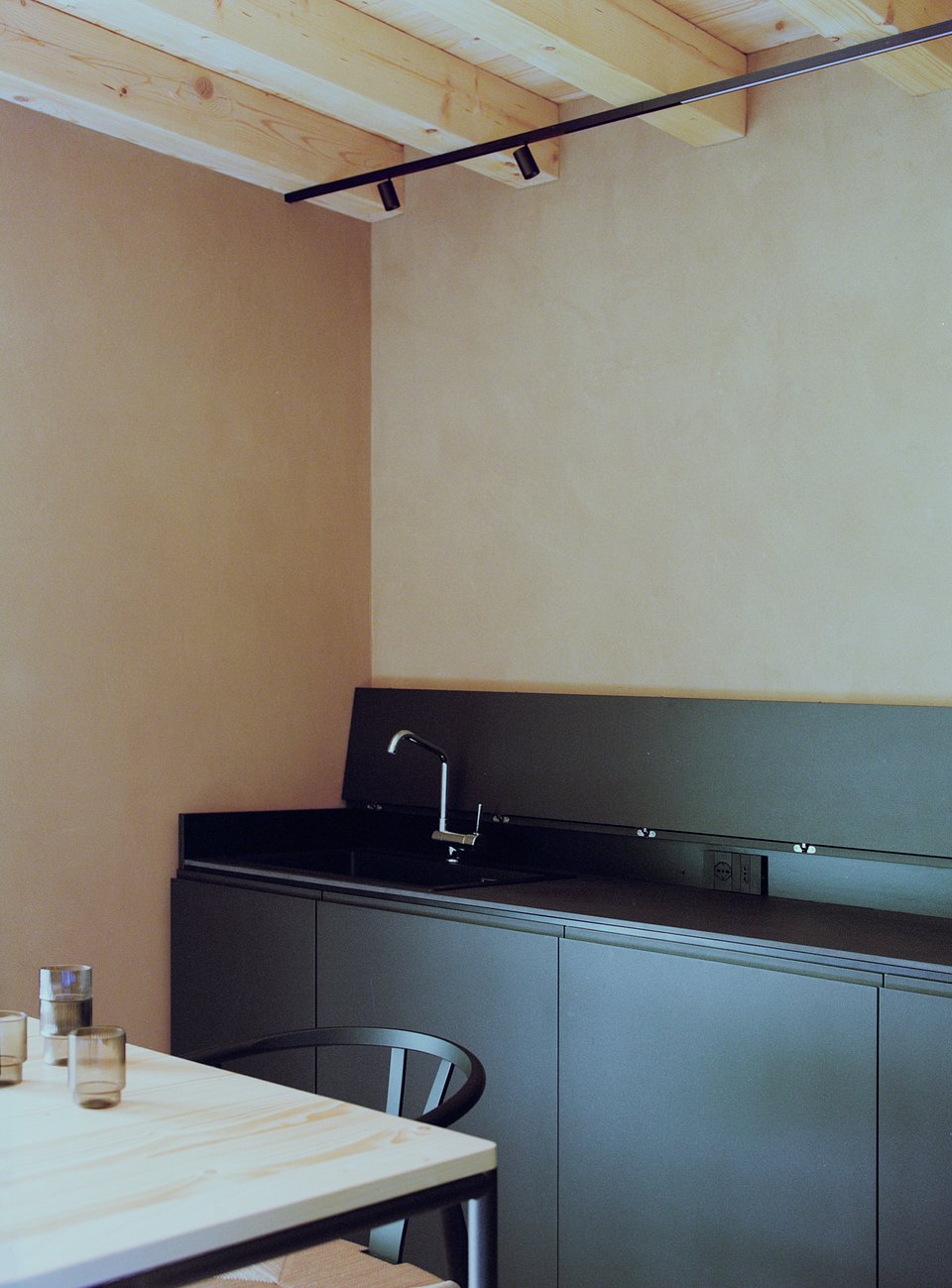
The contrast is also reflected in the tones: a soft color palette with earthy salmon hues on the walls interacts with the granular black of the steel elements treated with a powder coating for a deliberately textured appearance. Black is also echoed in the kitchen furnishings and bathroom fixtures.
All furnishings were custom designed. The kitchen made of lacquered MDF like the bathrooms is conceived as a fully transformable volume: a monolithic form that can be completely closed and disappear from view transforming into a simple piece of furniture. In this way the space can become a multifunctional environment.
The combination of natural surfaces and minimalist finishes gives the spaces both harmony and functionality. The result is an intimate and sophisticated environment where architecture material and light create a harmonious balance between the needs of contemporary living and the preservation of historical architectural heritage.
Great attention was given to the materials favoring natural and sustainable options. The original Venetian terrazzo flooring was preserved while the walls on both the ground floor and mezzanine level are finished with a natural clay-based plaster chosen for its breathable and sustainable qualities as well as for the tactile and visual texture it creates in contrast with the steel of the staircase. The bathrooms feature gres stone finishes contrasted with black sanitary fixtures of minimalist design contributing to a restrained yet strongly characterized aesthetic.
The contrast is also reflected in the tones: a soft color palette with earthy salmon hues on the walls interacts with the granular black of the steel elements treated with a powder coating for a deliberately textured appearance. Black is also echoed in the kitchen furnishings and bathroom fixtures.
All furnishings were custom designed. The kitchen made of lacquered MDF like the bathrooms is conceived as a fully transformable volume: a monolithic form that can be completely closed and disappear from view transforming into a simple piece of furniture. In this way the space can become a multifunctional environment.
The combination of natural surfaces and minimalist finishes gives the spaces both harmony and functionality. The result is an intimate and sophisticated environment where architecture material and light create a harmonious balance between the needs of contemporary living and the preservation of historical architectural heritage.