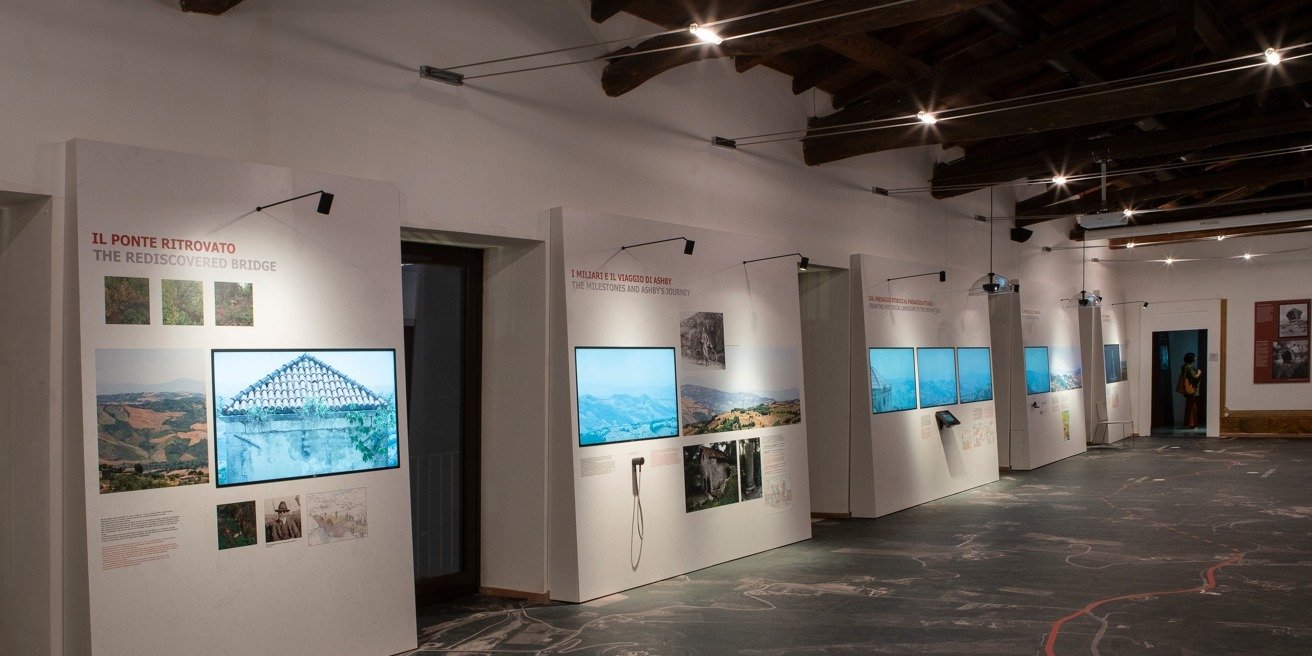
Rimani, a company specializing in the design and implementation of innovative lighting solutions based in Turin, managed the lighting design for the Museo ViaTor, Via Appia Traiana workshop for research, an interpretive center funded by the Ministry of Culture, dedicated to the construction and history of the Via Traiana.
The Via Traiana, the variant of the Appian Way recently included in the UNESCO World Heritage List, stretches from Benevento, crossing the Apennines, and descends along the Apulian coast to the port of Brindisi, from where it served as a departure point for campaigns against the Dacians and Parthians.
Located in the hills of Sannio in the 18th-century Palazzo Angelini in Buonalbergo, less than 30 km from Benevento, it tells the story of the road through multimedia displays, maps, models, reconstructions, and texts by both ancient and modern authors.
Concept and objectives
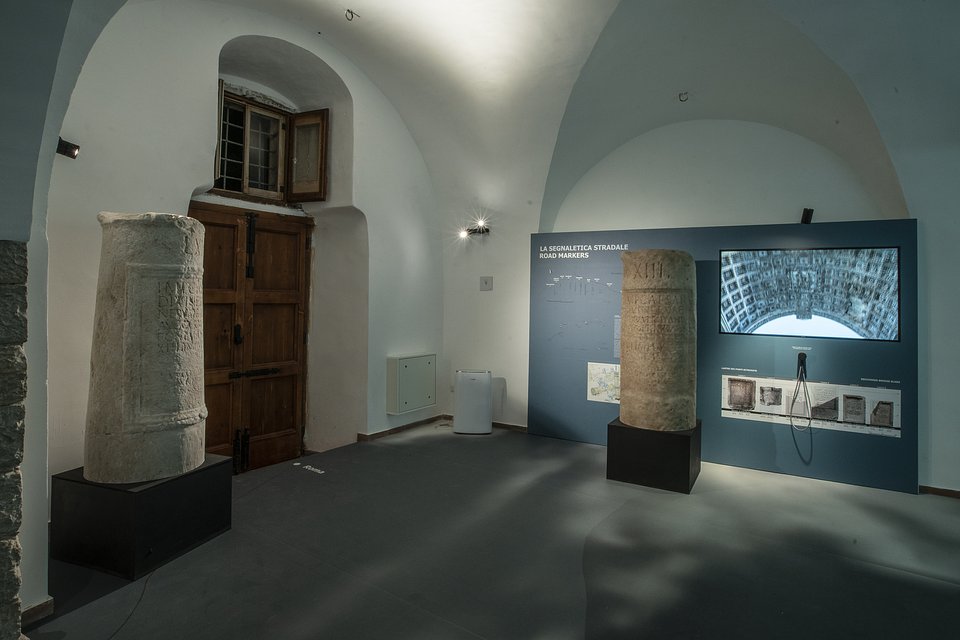
The lighting design concept developed by Rimani is based on the idea of making the museum setup clear and ergonomic. Light becomes a narrative tool capable of guiding visitors along the path, enhancing the content and scenographic elements without interfering with the immersive experience.
The lighting design concept developed by Rimani is based on the idea of making the museum setup clear and ergonomic. Light becomes a narrative tool capable of guiding visitors along the path, enhancing the content and scenographic elements without interfering with the immersive experience.
The project originated from the collaboration with Architect Luca Dal Pozzolo, initiated through the network of the Polytechnic University of Turin, where Carlo Albano, CEO and founder of Rimani, also taught as part of the IER Master’s program (Interior, Exhibit & Retail Design). This design dialogue allowed for the integration of academic expertise and industrial know-how.
Rimani products used
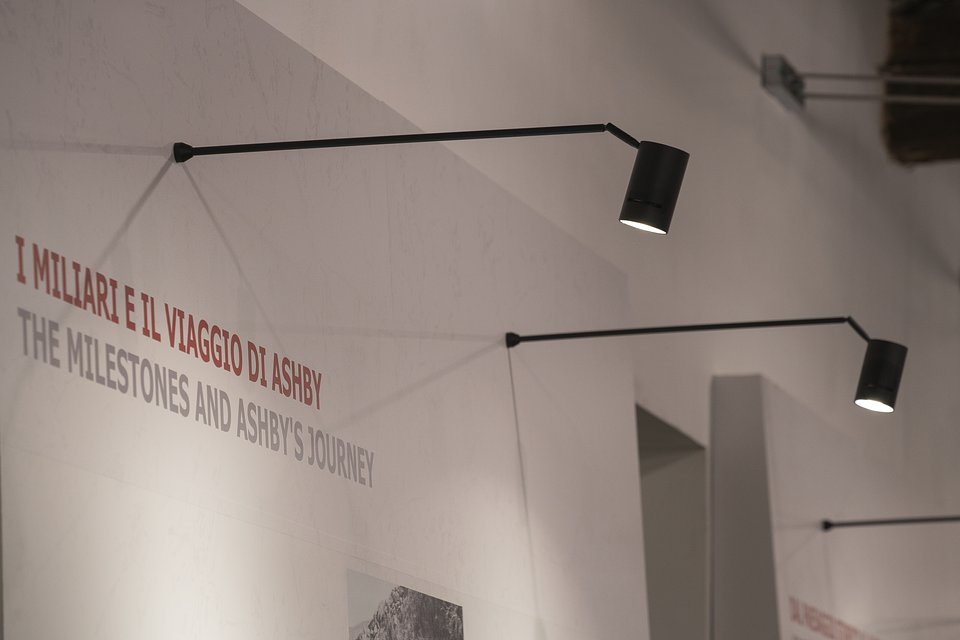
For the setup of the Museo ViaTor, the Solar60 product was used in both the Solar60Track and Solar60Wall versions. A discreet and precise product, it is capable of adapting to the different spatial configurations of the exhibition rooms thanks to its versatile installation options on the ceiling and walls, making the lighting more intense and effective.
For the setup of the Museo ViaTor, the Solar60 product was used in both the Solar60Track and Solar60Wall versions. A discreet and precise product, it is capable of adapting to the different spatial configurations of the exhibition rooms thanks to its versatile installation options on the ceiling and walls, making the lighting more intense and effective.
Solar is a type of single-source LED projector, with natural light covering the entire visible spectrum. It is a best-in-class element characterized by accurate color rendering with exceptional whiteness vividness, high intensity, and outstanding beam uniformity and effectiveness. It features innovative optics, both in terms of materials and usage methods: the self-centering magnetic attachment system allows for high flexibility in design and on-site implementation.
Benefits and added value
The lighting intervention had to account for the presence of video projections and immersive multimedia content. Rimani proposed a solution that ensures functional lighting compatible with the visual needs of the projections, avoiding light interference and preserving the quality of the narrative experience.
The lighting intervention had to account for the presence of video projections and immersive multimedia content. Rimani proposed a solution that ensures functional lighting compatible with the visual needs of the projections, avoiding light interference and preserving the quality of the narrative experience.
The Museo ViaTor project confirms Rimani’s ability to combine technology, aesthetics, and energy efficiency. The company positions itself as a reliable partner in managing complex technical challenges, offering simple and effective solutions that significantly improve energy performance without compromising visual quality.
With this intervention, Rimani reaffirms its commitment to enhancing cultural heritage through light, transforming lighting into a strategic tool for storytelling, orientation, and the conscious enjoyment of spaces.