The Padua-based firm Architettura Tommasi strengthens its role in the national architectural restoration landscape with a series of strategic interventions in Pietrasanta, a city recognized as one of the most vibrant centers of modern Italian art. In an urban context characterized by galleries, historic foundries, and the constant presence of international artists, the firm has taken on a central role in redefining some of the city’s key sites, interpreting the existing heritage through a contemporary, bold, and distinctive architectural language.
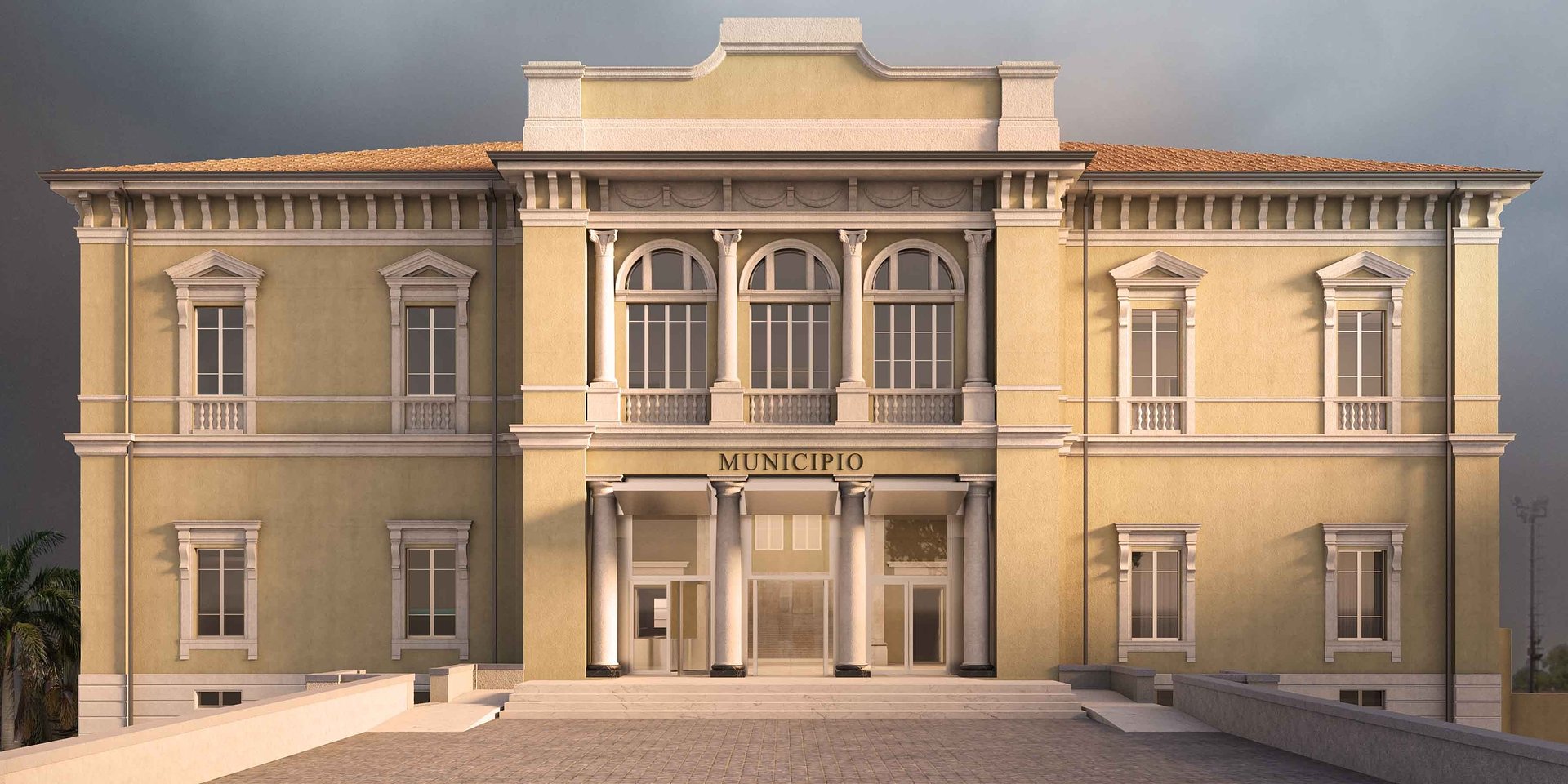
The most significant intervention concerns the former municipal headquarters in Piazza Matteotti, also known as Palazzo del Littorio, a 1920s building located just outside the historic center, which will be transformed into the Museum of the Historical Archive of Pietrasanta. The goal is to enhance a heritage of extraordinary importance: over 5,000 medieval historical maps currently preserved in the museum but never displayed. The project by Architettura Tommasi, commissioned by the Municipal Administration, will reorganize the museum spaces, using the former City Council Hall, known as Sala Mitoraj, on the first floor to create both permanent exhibition areas and spaces for temporary exhibitions.
The most significant intervention concerns the former municipal headquarters in Piazza Matteotti, also known as Palazzo del Littorio, a 1920s building located just outside the historic center, which will be transformed into the Museum of the Historical Archive of Pietrasanta. The goal is to enhance a heritage of extraordinary importance: over 5,000 medieval historical maps currently preserved in the museum but never displayed. The project by Architettura Tommasi, commissioned by the Municipal Administration, will reorganize the museum spaces, using the former City Council Hall, known as Sala Mitoraj, on the first floor to create both permanent exhibition areas and spaces for temporary exhibitions.
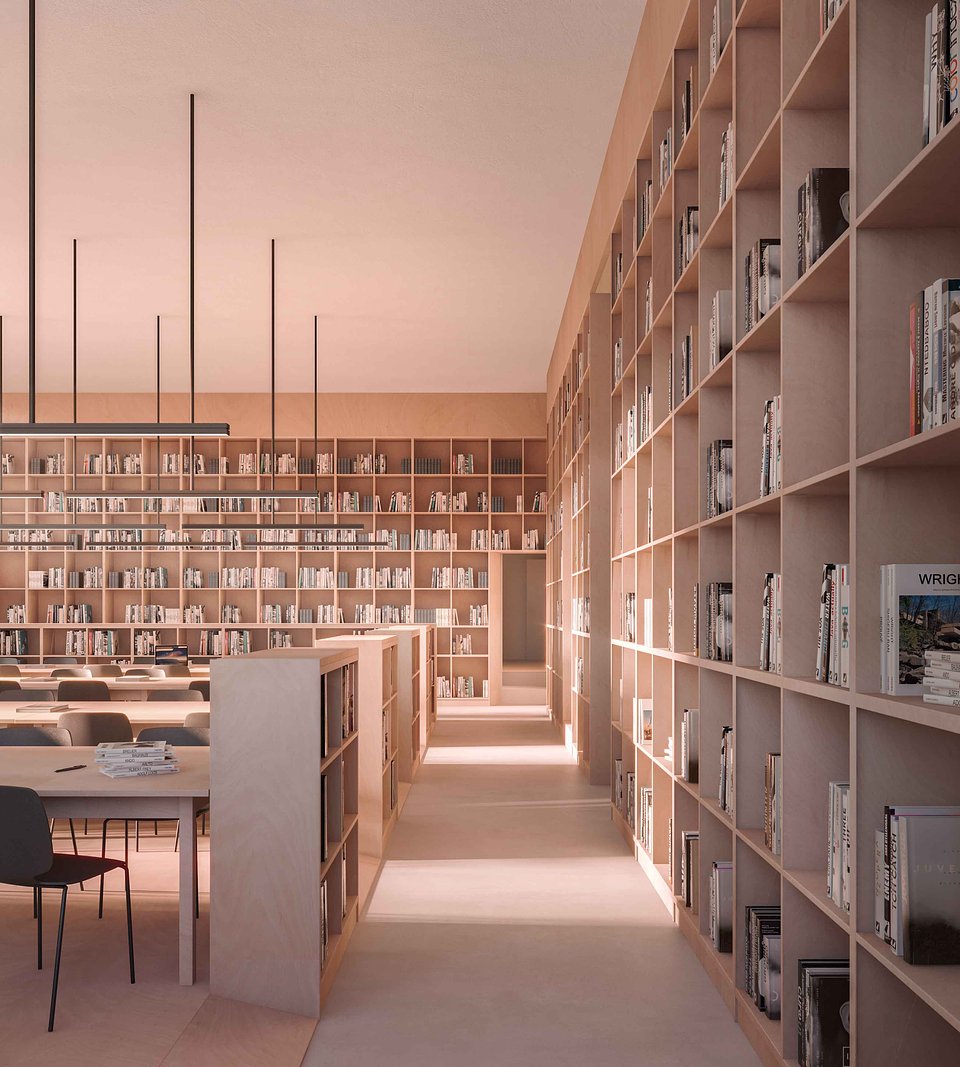
This was later complemented by a second intervention that will see the relocation of the Pietrasanta Library, currently housed within the cloister of Sant’Agostino, into the building. The library, to be located on the ground floor of the former town hall, will be designed according to European standards of accessibility and comfort, with particular attention to natural light, materials, inclusive signage for visually impaired visitors, and audiovisual tools.
A distinctive architectural element will be the new monumental internal staircase, created by reclaiming previously unusable spaces across several floors of the building, which will connect the library to the external square.
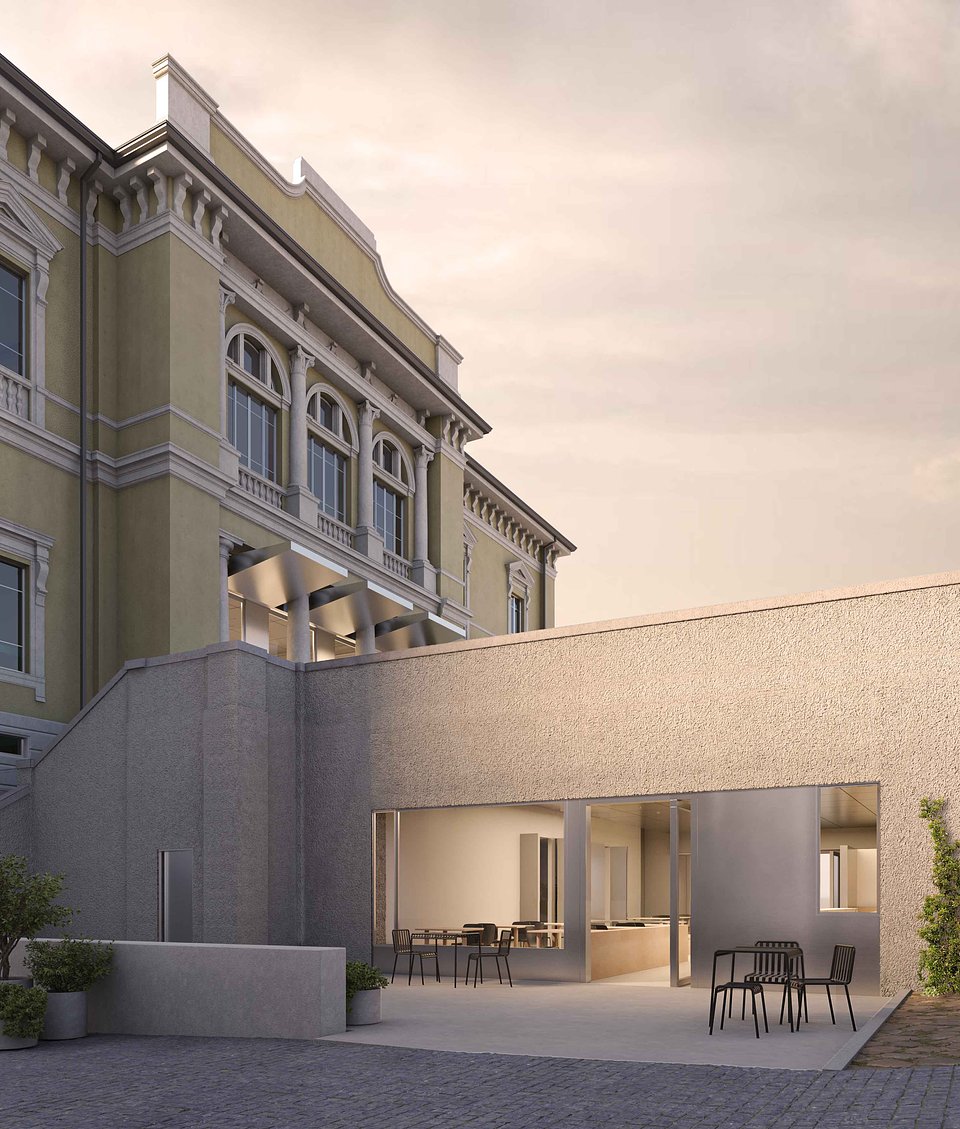
The project is not merely a conservative restoration but introduces significant contemporary architectural interventions aimed at fully enhancing the historic structure. A new projecting museum foyer will be added to the façade, along with a new architectural canopy that redefines the entrance and its relationship with the urban space.
A distinctive architectural element will be the new monumental internal staircase, created by reclaiming previously unusable spaces across several floors of the building, which will connect the library to the external square.
The project is not merely a conservative restoration but introduces significant contemporary architectural interventions aimed at fully enhancing the historic structure. A new projecting museum foyer will be added to the façade, along with a new architectural canopy that redefines the entrance and its relationship with the urban space.
Alongside the former Town Hall, Architettura Tommasi is also engaged in the restoration of Parco della Versiliana, a symbolic site subject to monument, landscape, and hydrogeological protection constraints. The project includes the insertion of a new architectural volume near the historic villa, with the aim of expanding cultural activities in the park during the winter months as well.
With these interventions, Architettura Tommasi confirms its ability to work on historic buildings using a bold contemporary language and its commitment to creating new public spaces that engage with the history of their surroundings without renouncing innovation. In Pietrasanta, the firm is not merely carrying out architectural restoration but is contributing to redefining the city’s cultural infrastructure, strengthening its role within the national and international artistic landscape.
With these interventions, Architettura Tommasi confirms its ability to work on historic buildings using a bold contemporary language and its commitment to creating new public spaces that engage with the history of their surroundings without renouncing innovation. In Pietrasanta, the firm is not merely carrying out architectural restoration but is contributing to redefining the city’s cultural infrastructure, strengthening its role within the national and international artistic landscape.