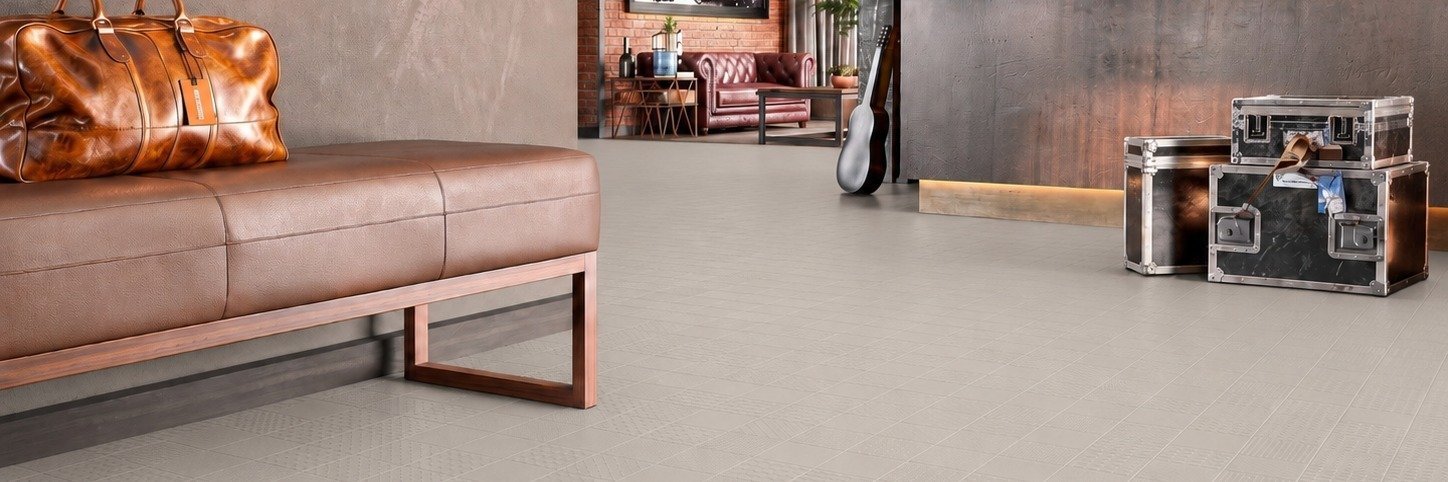
Part of the Pastelli Strutture collection, The Natural Geometry of Matter Appiani
Appiani, a Gruppo Bardelli brand and a leading name in the production of high-quality ceramic mosaics, presents a significant new evolution of the Pastelli Strutture collection: the Lamiere line. With Lamiere, the language of technical architecture enters the ceramic surface, drawing inspiration from the metal sheets used in construction, building sites and technical flooring: surfaces originally designed to meet requirements for strength, safety and functionality, characterised by immediately recognisable geometric reliefs. Appiani reinterprets their industrial character through colour and ceramic material, transforming a technical element into a surface conceived for contemporary design.
Lamiere starts precisely from these functional geometries. Dots, capsules, triangles, grids and diagonal marks are removed from their original context and transformed into two-dimensional relief textures. These are forms created to serve a function before having an aesthetic value. This essential quality becomes the heart of the project. Appiani reduces their language to its fundamental elements - mark, rhythm, repetition and relief - creating a family of surfaces where geometric precision meets the depth of Pastelli colour. The result retains the memory of the industrial world while completely changing its perception: sheet metal becomes ceramic, function becomes decoration, and the technical surface becomes material for architecture.
The technical geometries are isolated, redesigned and reinterpreted through different scales and densities. Finer patterns alternate with larger, more pronounced marks; ordered structures interact with diagonal directions; circular, linear and geometric elements create different rhythms. The project becomes an exploration of the relationship between micro and macro, between the perception of the individual mark and that of the surface as a whole. The result is a repertoire of two-dimensional tactile textures, united by the same industrial matrix yet capable of producing very different perceptions. Light completes the project: as it moves across the small reliefs, it highlights the design, creates shadows and continuously changes the way the surface is perceived.
Then colour comes into play. Freed from their traditional metallic identity, the industrial geometries meet the shades of Pastelli. The technical mark becomes softer, more sophisticated, almost unexpected. Contrast is what defines Lamiere: industrial precision meets the sensitivity of colour.
Lamiere is part of the material system of Pastelli Strutture and showcases Appiani's full-body technology. The through-body coloured composition makes colour and material a single ceramic body, ensuring chromatic continuity throughout the thickness and performance consistent with the project's technical identity. The reliefs are an integral part of the surface: they are not perceived as decoration applied on top, but as geometries formed within the material itself.
Lamiere starts precisely from these functional geometries. Dots, capsules, triangles, grids and diagonal marks are removed from their original context and transformed into two-dimensional relief textures. These are forms created to serve a function before having an aesthetic value. This essential quality becomes the heart of the project. Appiani reduces their language to its fundamental elements - mark, rhythm, repetition and relief - creating a family of surfaces where geometric precision meets the depth of Pastelli colour. The result retains the memory of the industrial world while completely changing its perception: sheet metal becomes ceramic, function becomes decoration, and the technical surface becomes material for architecture.
The technical geometries are isolated, redesigned and reinterpreted through different scales and densities. Finer patterns alternate with larger, more pronounced marks; ordered structures interact with diagonal directions; circular, linear and geometric elements create different rhythms. The project becomes an exploration of the relationship between micro and macro, between the perception of the individual mark and that of the surface as a whole. The result is a repertoire of two-dimensional tactile textures, united by the same industrial matrix yet capable of producing very different perceptions. Light completes the project: as it moves across the small reliefs, it highlights the design, creates shadows and continuously changes the way the surface is perceived.
Then colour comes into play. Freed from their traditional metallic identity, the industrial geometries meet the shades of Pastelli. The technical mark becomes softer, more sophisticated, almost unexpected. Contrast is what defines Lamiere: industrial precision meets the sensitivity of colour.
Lamiere is part of the material system of Pastelli Strutture and showcases Appiani's full-body technology. The through-body coloured composition makes colour and material a single ceramic body, ensuring chromatic continuity throughout the thickness and performance consistent with the project's technical identity. The reliefs are an integral part of the surface: they are not perceived as decoration applied on top, but as geometries formed within the material itself.
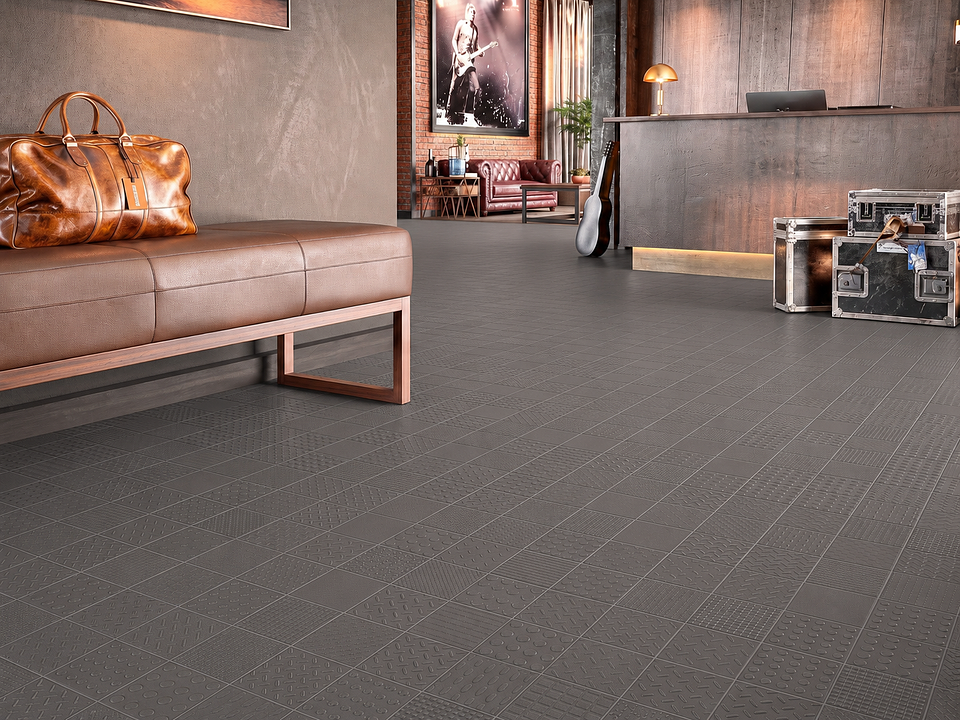
This characteristic takes on particular significance in a collection inspired by technical flooring. The memory of sheet metal is reinterpreted through ceramics, preserving its concepts of strength, function and durability while transforming them into a language suited to architecture and interior design.
With Lamiere, Appiani introduces into Pastelli an aesthetic deliberately removed from traditional ceramic decoration. Innovation emerges from the encounter between two worlds: the industrial culture of technical surfaces and the chromatic culture of Pastelli. What normally belongs to construction sites, workshops, platforms and infrastructure becomes a tool for interior design. Texture is not added to embellish the surface: the structure itself becomes decoration.
Function becomes surface. Surface becomes language.
With Lamiere, Appiani introduces into Pastelli an aesthetic deliberately removed from traditional ceramic decoration. Innovation emerges from the encounter between two worlds: the industrial culture of technical surfaces and the chromatic culture of Pastelli. What normally belongs to construction sites, workshops, platforms and infrastructure becomes a tool for interior design. Texture is not added to embellish the surface: the structure itself becomes decoration.
Function becomes surface. Surface becomes language.