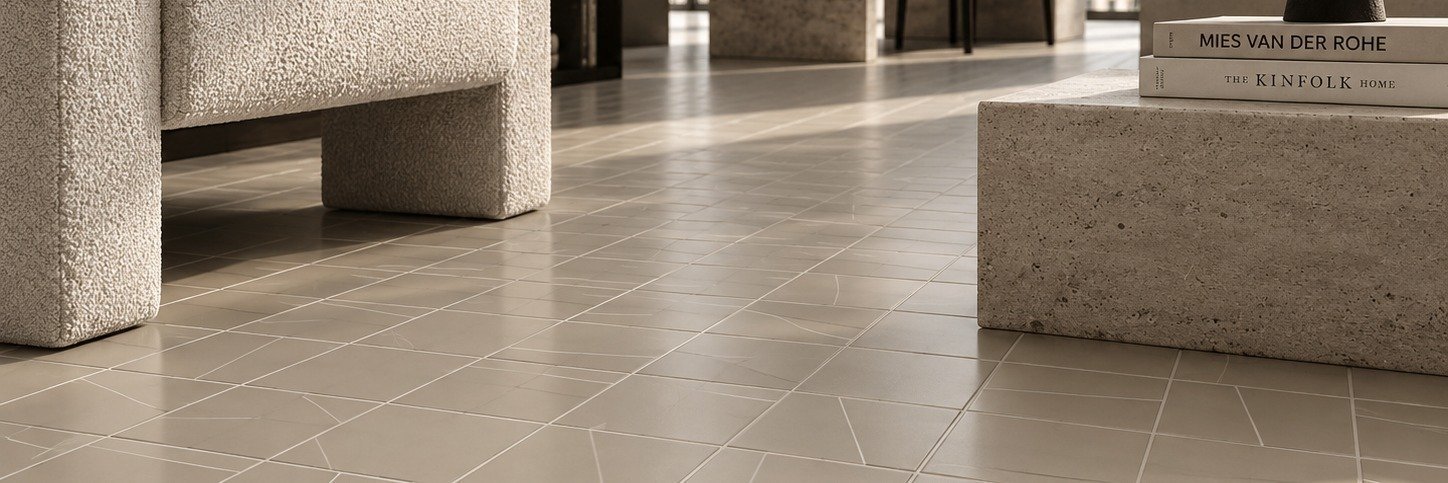
Part of the Pastelli Strutture collection, The Natural Geometry of Matter Appiani
Appiani, a Gruppo Bardelli brand and a leading name in the production of high-quality ceramic mosaics, presents a significant new evolution of the Pastelli Strutture collection: the Tagli line. With Tagli, Pastelli Strutture explores the relationship between line, surface and depth. The tile is crossed by low-relief lines that subtly alter the ceramic plane, creating changes in level that can be perceived both visually and by touch. A simple gesture - the cut - thus becomes a design tool capable of transforming an apparently uniform surface into a dynamic material, responsive to light and movement.
Tagli stems from research into the expressive value of the line. A series of incisions crosses the surface in different orientations, inclinations and positions: vertical, diagonal and horizontal. The line is not simply drawn onto the tile: it enters the material and alters its profile. The low relief creates a subtle change in level between the two portions of the surface, producing a sequence of rises and falls in the material. The tile remains essential, almost minimal, yet its flatness is interrupted. It is precisely this tension between plane and level change, continuity and interruption, light and shadow that defines the language of the collection.
The cut creates a boundary. On one side the plane rises, on the other it falls. The difference is minimal, yet enough to change the way the surface responds to light. Tactile low reliefs emerge, transforming an extremely simple geometry into a sequence of perceptual variations. From one position the line appears luminous; from another viewpoint it may become a shadow. The surface seems to change as one moves through the space. The result is a ceramic surface that seeks complexity not through decoration, but through the transformation of the plane itself. The line becomes material. Material becomes depth. Depth meets light. It is not the colour that changes, but its perception through the geometry of the surface. This makes Tagli particularly compelling in architectural design: a monochromatic surface can acquire rhythm, depth and movement simply through the encounter between material and light.
Tagli stems from research into the expressive value of the line. A series of incisions crosses the surface in different orientations, inclinations and positions: vertical, diagonal and horizontal. The line is not simply drawn onto the tile: it enters the material and alters its profile. The low relief creates a subtle change in level between the two portions of the surface, producing a sequence of rises and falls in the material. The tile remains essential, almost minimal, yet its flatness is interrupted. It is precisely this tension between plane and level change, continuity and interruption, light and shadow that defines the language of the collection.
The cut creates a boundary. On one side the plane rises, on the other it falls. The difference is minimal, yet enough to change the way the surface responds to light. Tactile low reliefs emerge, transforming an extremely simple geometry into a sequence of perceptual variations. From one position the line appears luminous; from another viewpoint it may become a shadow. The surface seems to change as one moves through the space. The result is a ceramic surface that seeks complexity not through decoration, but through the transformation of the plane itself. The line becomes material. Material becomes depth. Depth meets light. It is not the colour that changes, but its perception through the geometry of the surface. This makes Tagli particularly compelling in architectural design: a monochromatic surface can acquire rhythm, depth and movement simply through the encounter between material and light.
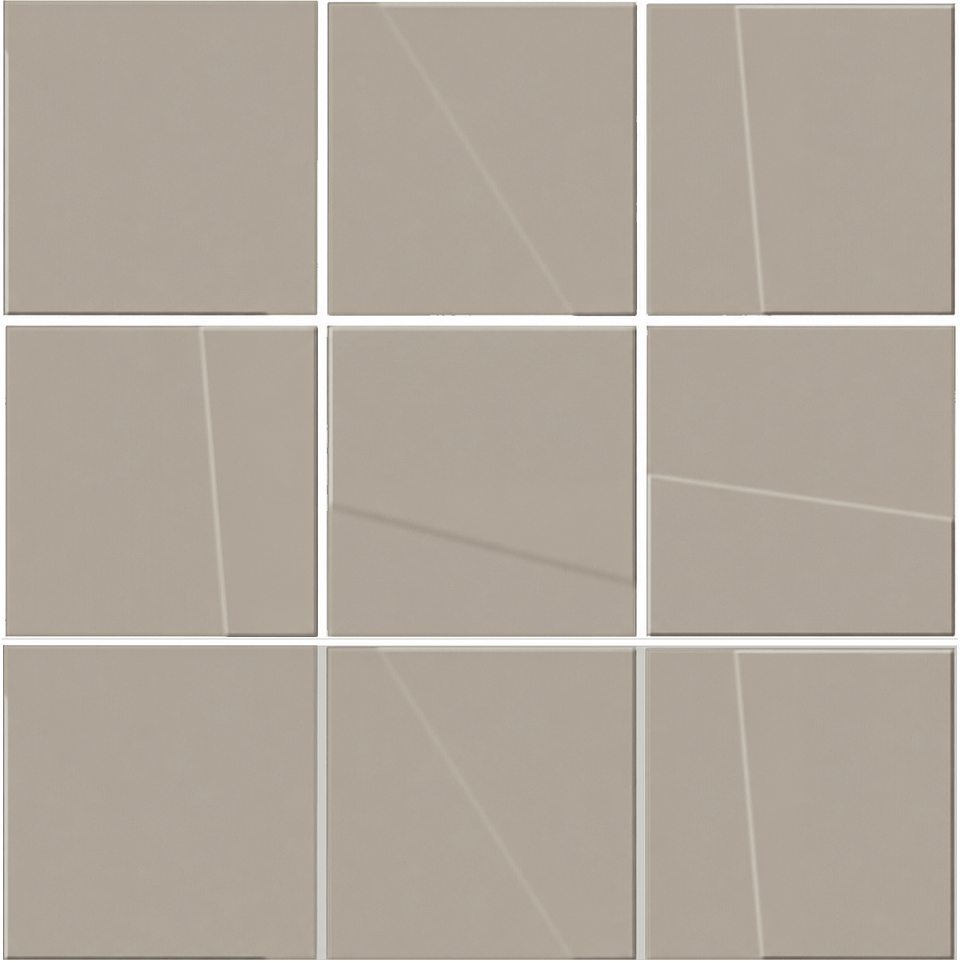
When placed side by side, the tiles create a broader composition in which the lines converge, move apart, change direction and continually interrupt the regularity of the grid. The individual mark thus loses its autonomy and becomes part of a geometric landscape in constant motion.
Tagli showcases Appiani full-body technology, with a through-body coloured composition. Colour runs through the entire thickness of the product and becomes part of the material itself, ensuring chromatic continuity and the high performance standards characteristic of Appiani production. The continuity between body, colour and structure reinforces the collection’s identity: the mark emerges from the material and exists together with it. The tactile structure and interplay of changing levels transform an essential surface into an element capable of interacting with light and space.
With Tagli, Appiani takes the concept of structure to its most essential expression. While Pietre interprets the irregularity of nature and Lamiere reinterprets the geometries of the technical and industrial world, Tagli focuses on the pure gesture: a line, an incision, a change in level. From these minimal elements emerges a surface capable of generating depth, movement and variations in light. The innovation lies in transforming a two-dimensional gesture - the line - into a physical and tactile experience through low relief.
A line interrupts the plane. The material changes level. Light reveals its depth.
Tagli showcases Appiani full-body technology, with a through-body coloured composition. Colour runs through the entire thickness of the product and becomes part of the material itself, ensuring chromatic continuity and the high performance standards characteristic of Appiani production. The continuity between body, colour and structure reinforces the collection’s identity: the mark emerges from the material and exists together with it. The tactile structure and interplay of changing levels transform an essential surface into an element capable of interacting with light and space.
With Tagli, Appiani takes the concept of structure to its most essential expression. While Pietre interprets the irregularity of nature and Lamiere reinterprets the geometries of the technical and industrial world, Tagli focuses on the pure gesture: a line, an incision, a change in level. From these minimal elements emerges a surface capable of generating depth, movement and variations in light. The innovation lies in transforming a two-dimensional gesture - the line - into a physical and tactile experience through low relief.
A line interrupts the plane. The material changes level. Light reveals its depth.