Part of the Pastelli Strutture collection, The Natural Geometry of Matter Appiani
Appiani, a Gruppo Bardelli brand and a leading name in the production of high-quality ceramic mosaics, presents a significant new evolution of the Pastelli Strutture collection: the Pietre line. With Pietre, the collection explores the relationship between surface, material and perception. Ceramics are not interpreted as a simple, uniform covering, but as an architectural skin capable of embracing the marks, vibrations and rhythms of nature. Within the world of Pastelli, Pietre introduces an exploration of two-dimensional structures, where relief remains measured, subtle and controlled, transforming the surface into a refined, essential and contemporary material field.
Pietre originates from the observation of natural stone surfaces: irregular textures, incisions, sedimentation, stratification and marks created by time on the material. The aim is not to reproduce a specific type of stone, but to interpret the spontaneous language of nature through a family of two-dimensional tactile decorations.
Appiani thus transforms the observation of nature into an exercise in design synthesis. Stone, long a symbol of authenticity and permanence, becomes the starting point for an exploration that does not seek to imitate its appearance, but to interpret what makes it unique: irregularity, markings, stratification and the apparent randomness of its surfaces.
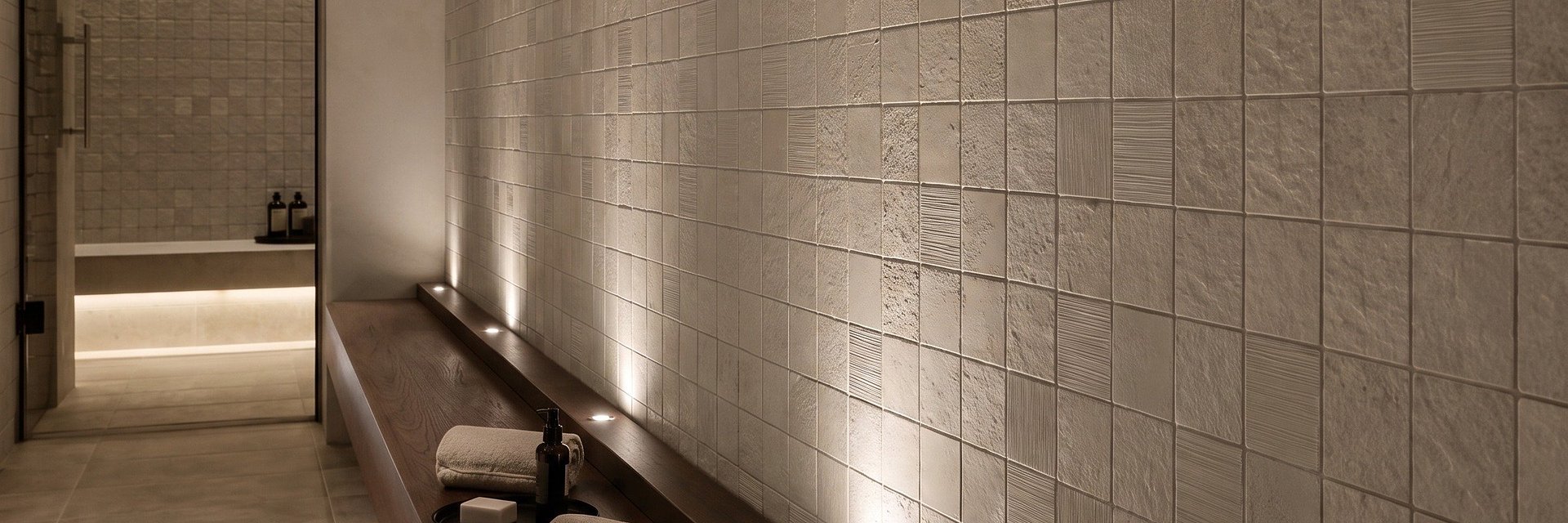
The collection consists of 10×10 cm elements characterised by different subtly raised textures. Variations in relief, engraving and texture define a series of two-dimensional tactile decorations, each interpreting a different expression of natural material. The individual elements are assorted and mounted on a 30×30 cm sheet composed of nine tiles, creating a composition in which the design emerges through alternation and varying densities and depths. Denser traces sit alongside broader marks, linear engravings meet more textured surfaces, and minute textures interact with more pronounced structures.
Pietre originates from the observation of natural stone surfaces: irregular textures, incisions, sedimentation, stratification and marks created by time on the material. The aim is not to reproduce a specific type of stone, but to interpret the spontaneous language of nature through a family of two-dimensional tactile decorations.
Appiani thus transforms the observation of nature into an exercise in design synthesis. Stone, long a symbol of authenticity and permanence, becomes the starting point for an exploration that does not seek to imitate its appearance, but to interpret what makes it unique: irregularity, markings, stratification and the apparent randomness of its surfaces.
The collection consists of 10×10 cm elements characterised by different subtly raised textures. Variations in relief, engraving and texture define a series of two-dimensional tactile decorations, each interpreting a different expression of natural material. The individual elements are assorted and mounted on a 30×30 cm sheet composed of nine tiles, creating a composition in which the design emerges through alternation and varying densities and depths. Denser traces sit alongside broader marks, linear engravings meet more textured surfaces, and minute textures interact with more pronounced structures.
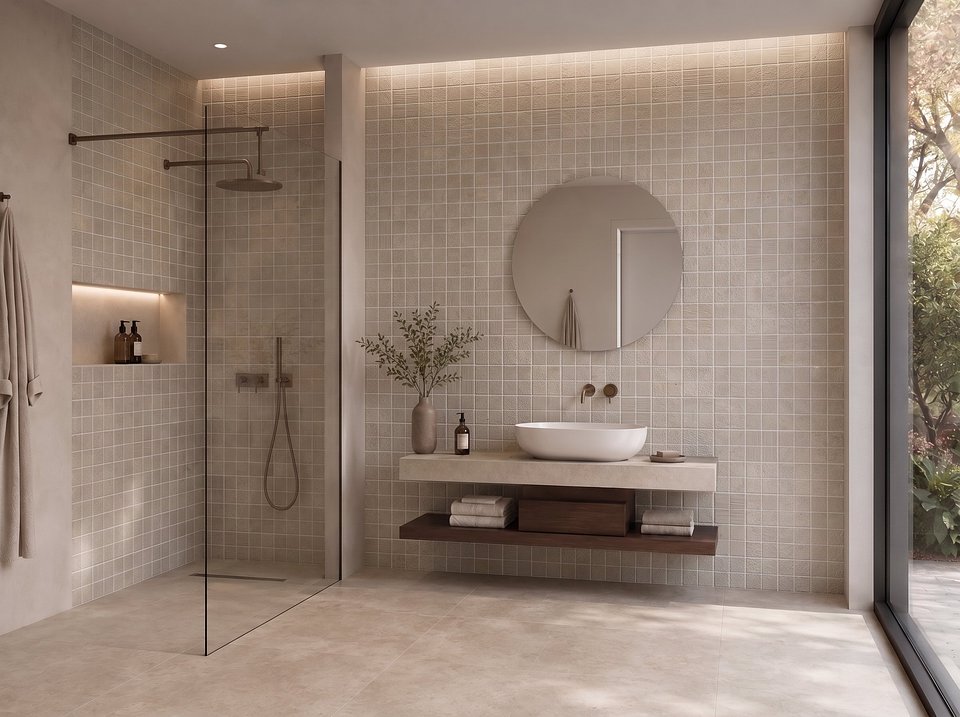
Repetition thus gives way to variation: each sheet becomes a small material composition, designed to simplify installation while creating an articulated, natural and dynamic surface.
Light moves across the subtle reliefs, generating shadows and vibrations that change with the viewing angle. From a distance, the surface appears balanced and continuous; up close, it gradually reveals the richness of the individual marks.
In Pietre, colour is not simply applied to the surface. Thanks to Appiani full-body technology, the ceramic body is coloured throughout: material, colour and structure become part of a single ceramic element. The texture is not layered onto the material, but formed together with it, enhancing authenticity, continuity and design value.
This technology also delivers high technical performance, particularly important in flooring applications where strength, durability and reliability play a central role.
With Pietre, Appiani expands the language of Pastelli by introducing a new concept of structure: not decoration simply applied to the surface, but designed material. Colour interacts with relief, tactility and light, giving rise to a more architectural and sensory surface. Available in five colours - Aurora, Burro, Osso, Ostrica and Ruscello - Pietre is designed for floor and wall applications, combining aesthetic research, natural inspiration and technical performance.
Nine elements, multiple marks, a single surface
Light moves across the subtle reliefs, generating shadows and vibrations that change with the viewing angle. From a distance, the surface appears balanced and continuous; up close, it gradually reveals the richness of the individual marks.
In Pietre, colour is not simply applied to the surface. Thanks to Appiani full-body technology, the ceramic body is coloured throughout: material, colour and structure become part of a single ceramic element. The texture is not layered onto the material, but formed together with it, enhancing authenticity, continuity and design value.
This technology also delivers high technical performance, particularly important in flooring applications where strength, durability and reliability play a central role.
With Pietre, Appiani expands the language of Pastelli by introducing a new concept of structure: not decoration simply applied to the surface, but designed material. Colour interacts with relief, tactility and light, giving rise to a more architectural and sensory surface. Available in five colours - Aurora, Burro, Osso, Ostrica and Ruscello - Pietre is designed for floor and wall applications, combining aesthetic research, natural inspiration and technical performance.
Nine elements, multiple marks, a single surface